Imagine my surprise when I found out that I'm into genealogy. It started with the desire to learn more about my grandfather, a man I'd never met but who I knew through stories had served in World War II. This new found curiosity was unexpected considering I'd spent my entire life (up to this point at least) blissfully unaware of exactly who "my people" were and where they came from. That's the beauty of America and the melting pot though, right? In a generation or two the idea of "my people" wanes and we're all simply Americans. That's the promise anyway.
In any event, my wife has a knack for this kind of research and it wasn't long before she unearthed all manner of relevant information. It was fascintating stuff, and not at all what I expected. Suffice it to say the results didn't line-up particularly well with the ancestral narrative I'd constructed in my head.

Let's start first though with what we knew. I was raised Catholic in Cincinnati, Ohio. My grandmother's maiden name was Westhoff. She could speak German. She married a man named Sullivan. Their first daughter was my mom. Westhoff is a common Germanic surname; Sullivan, a common Irish name.
Given these facts, and factoring in known immigration patterns, I sketched out a mental image of my roots. I surmised that both the Westhoffs and Sullivans came to the U.S. at the peak of 19th-Century immigration. The Sullivans likely arrived on the heels of the Irish Potato Famine (1845-1852) and the Westhoffs likely came during the height of German immigration (1881-1885). In my head, my ancestors helped build Cincinnati. The Westhoffs were likely stonecutters, plasterers or brick layers while the Sullivans would have helped build and maintain the railroads. This was Cincinnati after all. That's what German and Irish immigrants did, right?

Wrong. My German side didn't build Cincinnati. It was more or less built by the time they got here. Oh, and they weren't particularly German either. It turns out the Westhoffs arrived in the U.S. in 1909. Ignatius Westhoff and his wife Rosa landed at Ellis Island after starting their journey in what was then Topolya, Hungary. Today Topolya, Hungary isn't even Topolya any more. It's not in Hungary either. Thanks to wars, treaties, and shifting boundaries it's in northern Serbia now and goes by the name Backa Topola.

The Sullivan side was also a surprise. It seems I'm not descended from Potato Famine immigrants after all. The Sullivan line traces itself back to a farm in Boone County, Kentucky; a farm the Sullivan family held throughout the 19th-Century. If preliminary research holds up, the line goes all the way back to Virginia in the late 18th-Century. That means it's likely that this particular line of Sullivans were Protestant/Presbyterians (i.e. not Catholic) from the northern Ireland province of Ulster.
So, I'm not so German, not so Irish, and not so Catholic as I assumed. At least that's the case on my mother's side. On my father's side we've still got Regensburgers and Callahans to track down, so things might change. It's strange in a way. The demise of my imagined ancestral story shouldn't feel like a loss, but somehow it does. I thought I was this one thing, and now it turns out I'm not. I'm something else instead. That will take some getting used to.
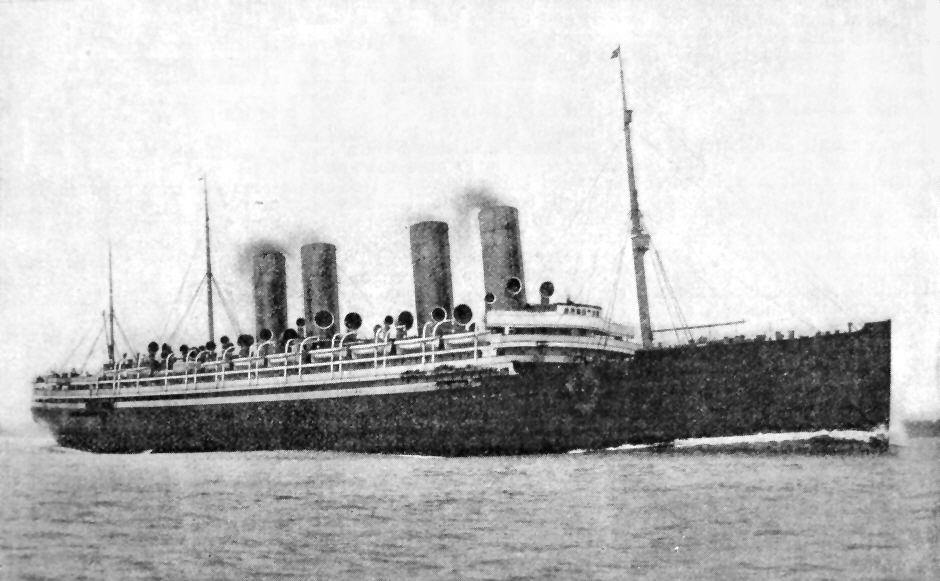
On the other hand, I've got rich new details to consider. I've conceivably got roots going back to the American Revolution (or as my wife pointed out, the Sullivans of Kentucky probably knew Daniel Boone!). As for the Westhoffs, I was tickled to find out they came to the U.S. on board the SS Kaiser Wilhelm II. The ship was a famous ocean liner in its own right, made even more notable as the setting of Alfred Stieglitz photographic masterpiece, The Steerage. It's easy to look at that famous picture from just two years prior and imagine Ignatius and Rosa crowded among the mass of immigrants on the lower deck.
As for my grandfather, the one I never met, I learned a lot about him as well. Wilfred C. Sullivan was born in 1909 in Boone County, Kentucky, the first son of Cad and Virgie Lee Sullivan. He married Christine Westhoff and in 1937 they had a daughter named Patricia Sullivan. Their daughter married Tom Regensburger and had a son named Jeff. Wilfred served in the 44th Bomb Group stationed in Shipdham, England. His plane was returning from a bombing run over Kjeller, Norway on November 18, 1943 when it went down in the North Sea. No bodies were recovered and all ten crew members were listed as killed in action. It was Wilfred's second mission.

In any event, my wife has a knack for this kind of research and it wasn't long before she unearthed all manner of relevant information. It was fascintating stuff, and not at all what I expected. Suffice it to say the results didn't line-up particularly well with the ancestral narrative I'd constructed in my head.

Passenger List, Ellis Island, March 22, 1909
Let's start first though with what we knew. I was raised Catholic in Cincinnati, Ohio. My grandmother's maiden name was Westhoff. She could speak German. She married a man named Sullivan. Their first daughter was my mom. Westhoff is a common Germanic surname; Sullivan, a common Irish name.
Given these facts, and factoring in known immigration patterns, I sketched out a mental image of my roots. I surmised that both the Westhoffs and Sullivans came to the U.S. at the peak of 19th-Century immigration. The Sullivans likely arrived on the heels of the Irish Potato Famine (1845-1852) and the Westhoffs likely came during the height of German immigration (1881-1885). In my head, my ancestors helped build Cincinnati. The Westhoffs were likely stonecutters, plasterers or brick layers while the Sullivans would have helped build and maintain the railroads. This was Cincinnati after all. That's what German and Irish immigrants did, right?
Backa Topola, Serbia
Wrong. My German side didn't build Cincinnati. It was more or less built by the time they got here. Oh, and they weren't particularly German either. It turns out the Westhoffs arrived in the U.S. in 1909. Ignatius Westhoff and his wife Rosa landed at Ellis Island after starting their journey in what was then Topolya, Hungary. Today Topolya, Hungary isn't even Topolya any more. It's not in Hungary either. Thanks to wars, treaties, and shifting boundaries it's in northern Serbia now and goes by the name Backa Topola.
Alfred Stieglitz, The Steerage
The Sullivan side was also a surprise. It seems I'm not descended from Potato Famine immigrants after all. The Sullivan line traces itself back to a farm in Boone County, Kentucky; a farm the Sullivan family held throughout the 19th-Century. If preliminary research holds up, the line goes all the way back to Virginia in the late 18th-Century. That means it's likely that this particular line of Sullivans were Protestant/Presbyterians (i.e. not Catholic) from the northern Ireland province of Ulster.
So, I'm not so German, not so Irish, and not so Catholic as I assumed. At least that's the case on my mother's side. On my father's side we've still got Regensburgers and Callahans to track down, so things might change. It's strange in a way. The demise of my imagined ancestral story shouldn't feel like a loss, but somehow it does. I thought I was this one thing, and now it turns out I'm not. I'm something else instead. That will take some getting used to.
On the other hand, I've got rich new details to consider. I've conceivably got roots going back to the American Revolution (or as my wife pointed out, the Sullivans of Kentucky probably knew Daniel Boone!). As for the Westhoffs, I was tickled to find out they came to the U.S. on board the SS Kaiser Wilhelm II. The ship was a famous ocean liner in its own right, made even more notable as the setting of Alfred Stieglitz photographic masterpiece, The Steerage. It's easy to look at that famous picture from just two years prior and imagine Ignatius and Rosa crowded among the mass of immigrants on the lower deck.
SS Kaiser Wilhelm II
As for my grandfather, the one I never met, I learned a lot about him as well. Wilfred C. Sullivan was born in 1909 in Boone County, Kentucky, the first son of Cad and Virgie Lee Sullivan. He married Christine Westhoff and in 1937 they had a daughter named Patricia Sullivan. Their daughter married Tom Regensburger and had a son named Jeff. Wilfred served in the 44th Bomb Group stationed in Shipdham, England. His plane was returning from a bombing run over Kjeller, Norway on November 18, 1943 when it went down in the North Sea. No bodies were recovered and all ten crew members were listed as killed in action. It was Wilfred's second mission.

B-24s of the 44th Bomb Group
Comments
Post a Comment